Global growth set to stall in 2025, UN flags financial and geopolitical risks

UNCTAD forecasts global growth will slow to 2.6 per cent in 2025, citing rising financial volatility and geopolitical risks, with developing economies facing higher borrowing costs and climate-related pressures.
Global economic growth is expected to slow to 2.6 per cent in 2025, down from 2.9 per cent in 2024, as financial volatility and geopolitical uncertainty weigh on global trade and investment, the United Nations Conference on Trade and Development (UNCTAD) said in a report released on Tuesday.
According to UNCTAD’s Trade and Development Report 2025, shifts in financial markets now influence global trade almost as strongly as real economic activity, shaping development prospects across the world, the UN trade body said.
More To Read
- Africa’s land holds the future of climate adaptation: Why COP30 can’t overlook it
- African countries gear up for major push on climate innovation, climate financing and climate change laws
- Green investment rises as lenders pump Sh18 trillion into climate finance
- Kenya, Ethiopia to boost cooperation on renewable energy, climate finance as Ruto attends Africa climate summit
- Africa Climate Summit 2025: Addis Ababa faces pressure to deliver on Nairobi Declaration pledges
- Multinationals turn to Kenyan professionals, cut expatriate staff
The report added that, despite potential benefits from emerging technologies such as artificial intelligence, global growth is set to remain subdued in 2026 at 2.6 per cent.
UNCTAD said its forecast is based on global growth calculations using market exchange rate (MER) weights, rather than the purchasing power parity (PPP) weights used by the OECD, which typically produce a higher global growth estimate. On the same day, the OECD projected global GDP growth would slow from 3.2 per cent in 2025 to 2.9 per cent in 2026.
UNCTAD Secretary-General Rebeca Grynspan said the findings highlight the growing role of financial conditions in determining the direction of global trade. "Trade is not just a chain of suppliers. It is also a chain of credit lines, payment systems, currency markets and capital flows," she said.
The report forecasts that developing economies will grow by 4.3 per cent in 2025, significantly outpacing advanced economies.
However, higher financing costs, greater vulnerability to sudden capital flow reversals and rising climate-related financial risks continue to constrain the fiscal and investment space these economies need to sustain growth.
It also noted that many developing countries with small domestic financial markets rely on external borrowing at far higher interest rates of 7 to 11 per cent, compared with 1 to 4 per cent in major advanced economies.
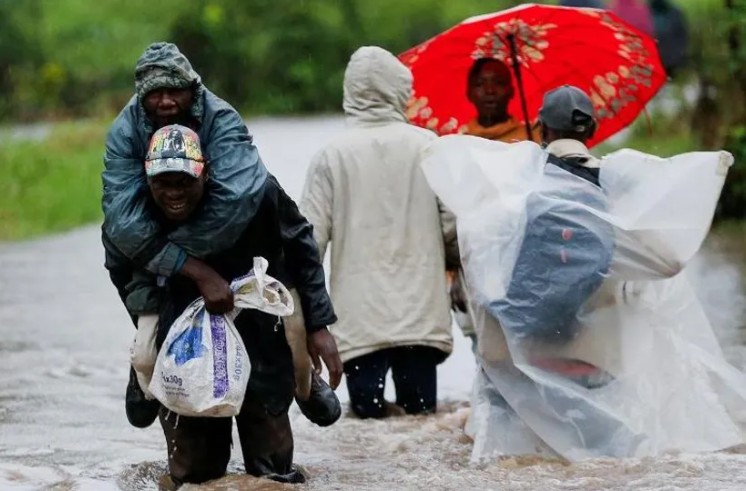
Climate vulnerability worsens these pressures, with countries repeatedly hit by extreme weather paying an estimated 20 billion U.S. dollars more in interest each year.
UNCTAD urged a package of reforms to reduce financial vulnerability, enhance predictability and strengthen the alignment between trade, finance and development.
These measures span trade rules, statistical systems, the international monetary framework and capital markets, among other areas.
Top Stories Today